

Overview
This page is intended for growth teams, web managers, and product marketers who want to create and improve websites. Using NoimosAI, you can handle the entire process from initial website draft creation, copy and CTA revisions, understanding dropout factors, checking appeals used in competitor ads, organizing improvement priorities, to post-publication analysis.Recommended Setup
Integrations
- Google Analytics
- Google Search Console
- WordPress
- Google Drive
Pages
Start Workflow
Workflow 1: Website Creation and Initial Improvement
Workflow 1: Website Creation and Initial Improvement
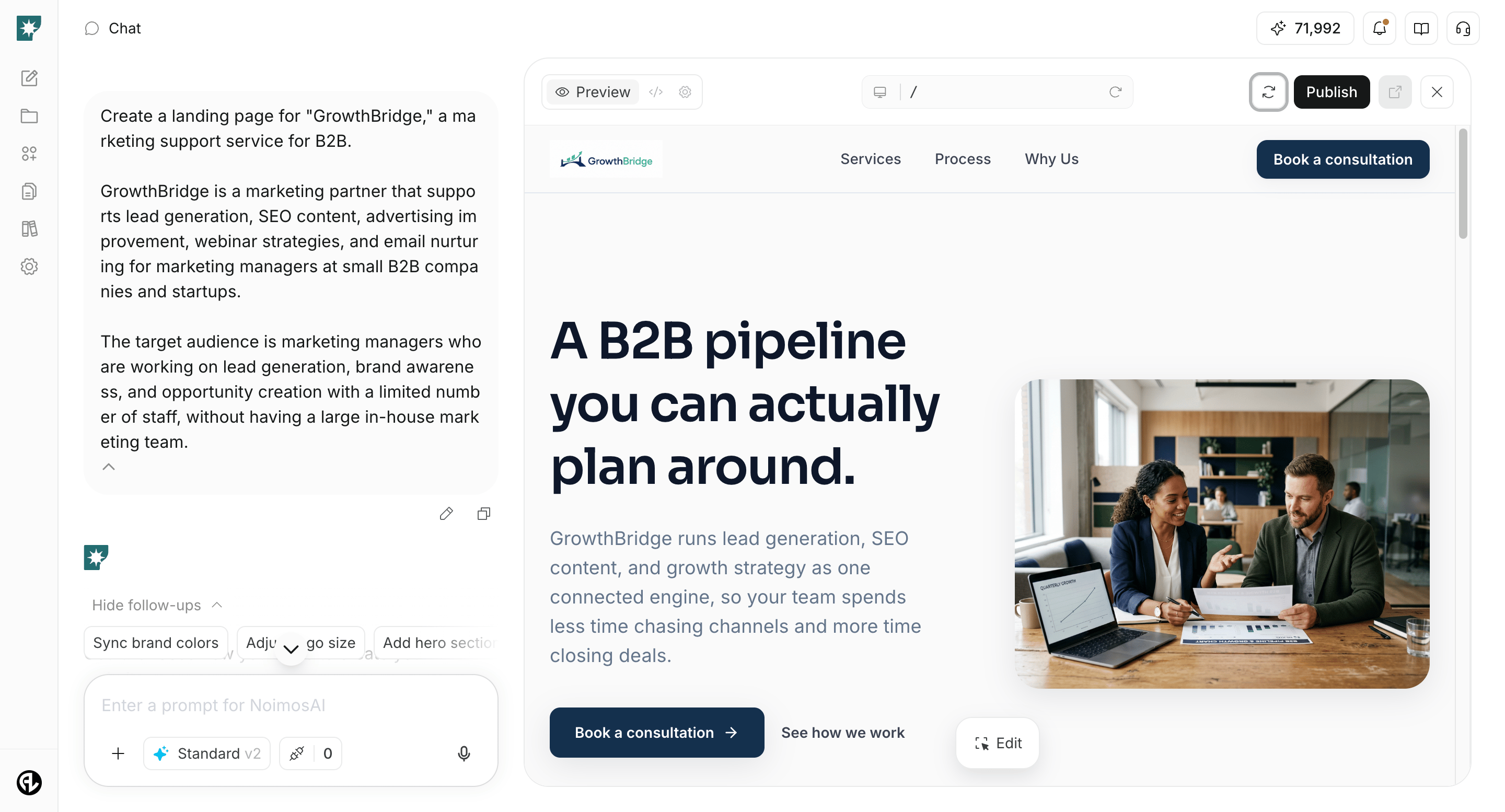
- Purpose: Create initial drafts of websites or landing pages tailored to the objective
- Execution Timing: When launching new services, campaigns, or inquiry flows
- Example Prompt:
Create a landing page for a B2B service including first view, problem presentation, feature introduction, benefits of adoption, pricing, FAQ, and a free consultation CTA. - Output: Initial website draft and improvement candidates
- Checkpoints: Confirm if the purpose, target, and CTA are appropriate
Workflow 2: Conversion Analysis
Workflow 2: Conversion Analysis
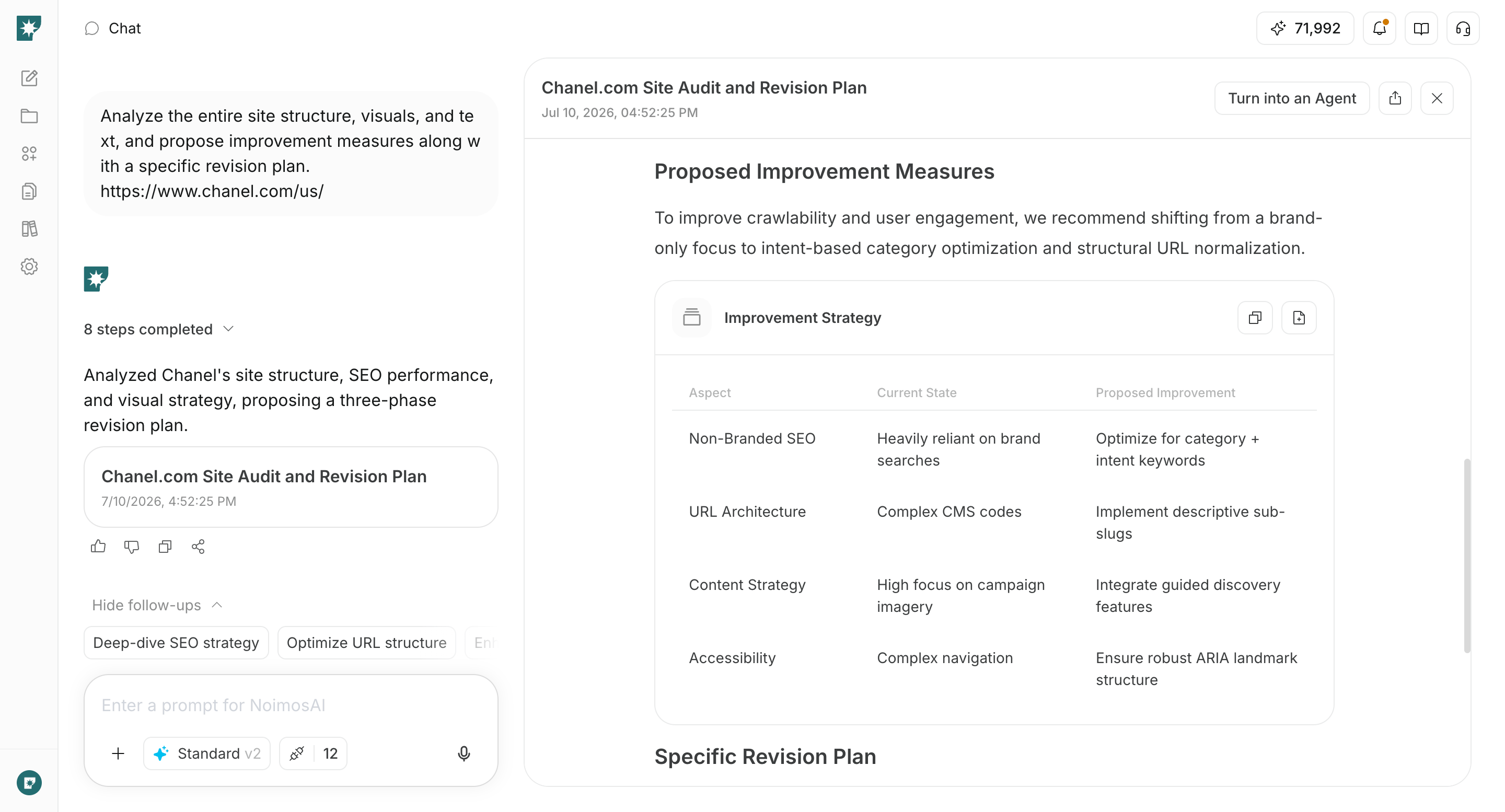
- Purpose: Identify bottlenecks on priority pages
- Execution Timing: Weekly or when reviewing major LPs and flows
- Example Prompt:
Analyze the overall site structure, visuals, and text, and propose improvement measures with specific revision plans. - Output: Priority issues and revision proposals
- Checkpoints: Confirm if the issues affect conversion
Workflow 3: Copy and UX Revision Planning
Workflow 3: Copy and UX Revision Planning
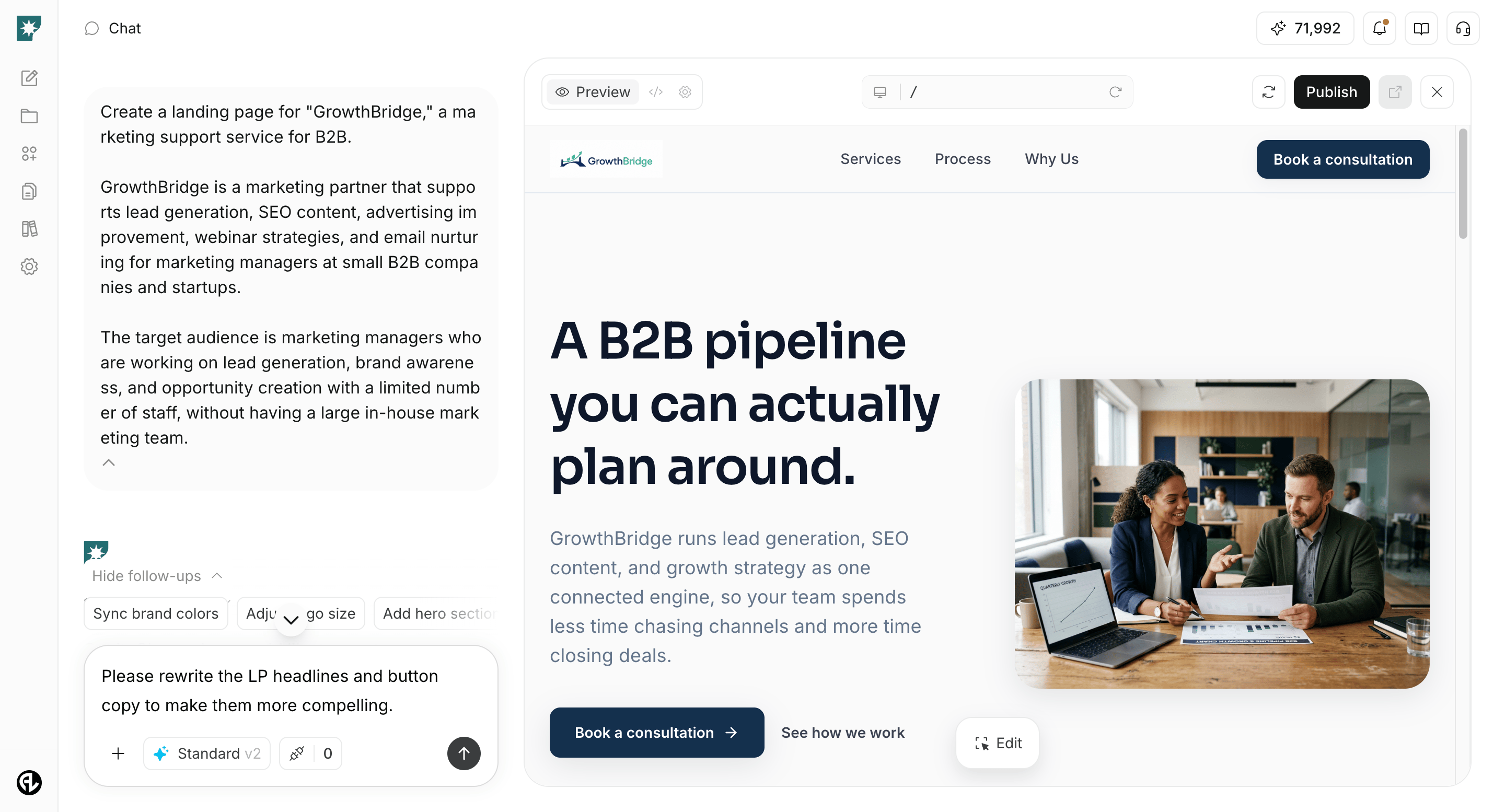
- Purpose: Turn analysis results into concrete improvement proposals
- Execution Timing: After identifying important pages or sections
- Example Prompt:
Rewrite the LP headlines and button texts to more compelling expressions. - Output: Headline, CTA, and message improvement proposals
- Checkpoints: Confirm if the proposals are specific enough for the team to implement directly
Workflow 4: Performance Review
Workflow 4: Performance Review
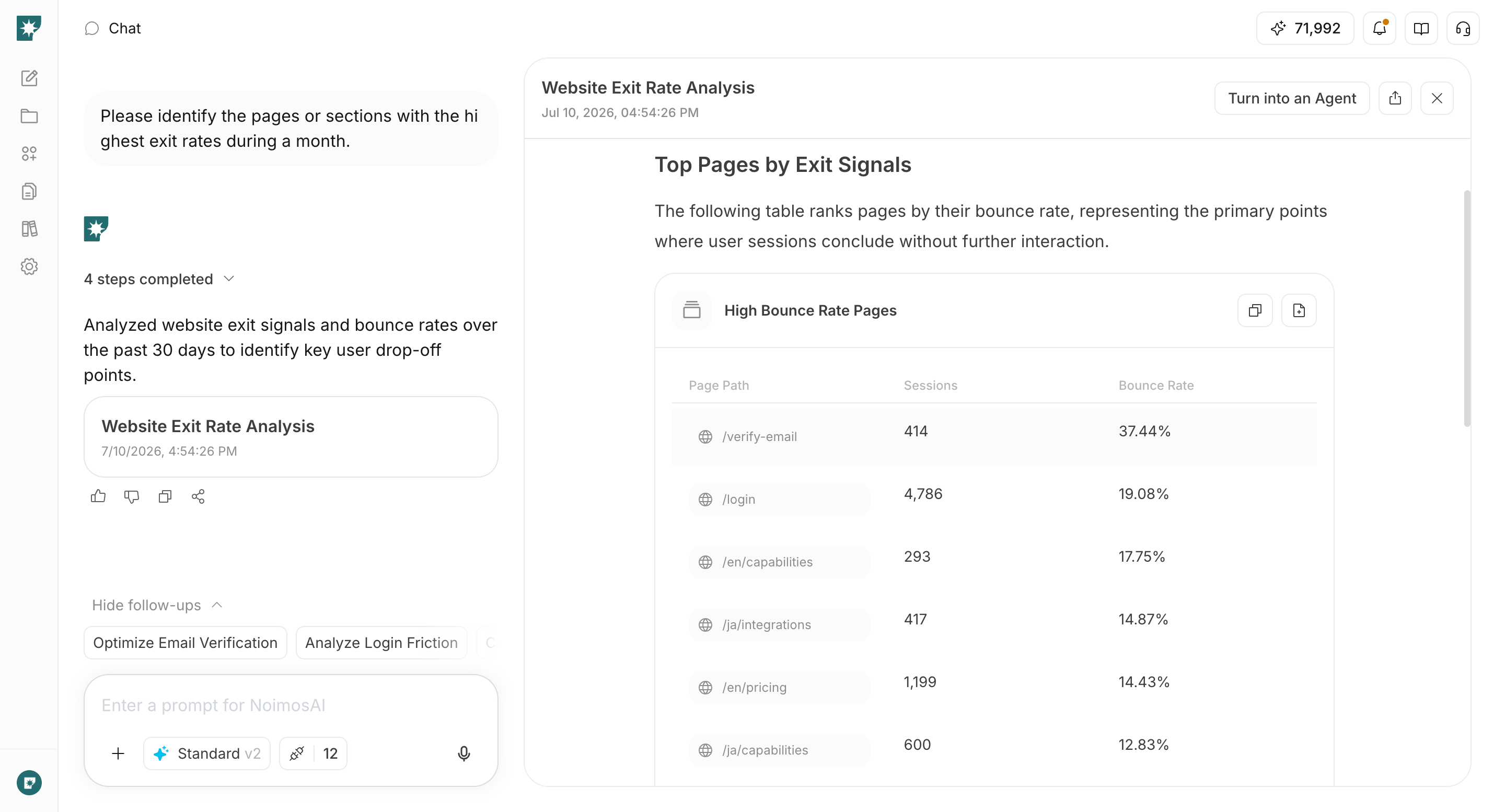
- Purpose: Understand conversion changes and next improvement points
- Execution Timing: Weekly when recent conversion and traffic metrics are available
- Example Prompt:
Identify pages or sections with the highest dropout rates during [specific period]. - Output: Analysis results of pages and sections with high dropout rates
- Checkpoints: Confirm if it leads to the next updates or experiments
Expected Benefits
- Easier to start with high-priority improvement items rather than subjective choices
- Create initial website drafts via chat and improve while previewing
- Easily connect analysis results to implementable copy and UX revisions
- Organize test information in one place
- Turn weekly reviews into concrete improvement tasks
- Reflect market appeals found in ad search into LP and form improvements